Vietnam Energy Sector 2026–2030: Completing Policy Frameworks to Unlock a New Growth Cycle

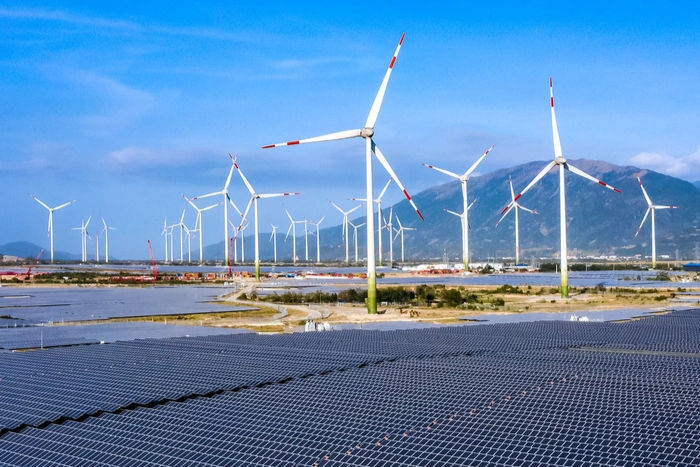
Energy – The Key to Achieving 10% Annual GDP Growth
Within the structure of economic operations, energy consumption growth has consistently shown a particularly strong correlation with economic growth (GDP). During the 2015–2023 period, these two indicators recorded average annual growth rates of +5.88% and +5.92%, respectively. The industrial sector, the primary driver of energy demand, accounted for 52.3% of total consumption in 2023 and achieved an impressive CAGR of +9.8% per year. Pressure on the national energy system is becoming increasingly evident as the 2026 Socio-Economic Development Plan Resolution targets minimum GDP growth of 10% per year for the 2026–2030 period. This is no longer an aspiration but a mandatory target, pushing baseline electricity demand growth to 10–12% annually, and potentially as high as 15% per year under extreme scenarios.


To meet this target, the revised Power Development Plan VIII (Decision No. 768/QĐ-TTg signed on April 15, 2025) sets a target of total installed capacity reaching 183–236 GW by 2030. This means Vietnam must add an additional 93–146 GW within just five years - equivalent to the entire capacity accumulated over previous decades. However, the State sector’s investment capacity is facing significant challenges. Vietnam Electricity (EVN) is carrying accumulated losses of approximately VND 44.792 trillion (~USD 1.83 billion) as of the end of 2024. This erosion of financial resources is forcing the Government to finalize policy mechanisms aimed at mobilizing an average of USD 27.3 billion annually from private and international markets.
Current Situation: Domestic Power Flows Constrained by Structural Imbalances
The decline in domestic resource extraction is the first major bottleneck. Crude oil production has fallen by -6.8% annually, gas output by -9.1% annually since 2019, and coal production by -4.2% annually after peaking in 2022. The primary causes stem from insufficient new investment during the period of low global fuel prices (2015–2020) and delays in revising sector-specific legislation compared to regional peers.
Coal continues to play a dominant role in ensuring energy security, while oil accounts for a very small share and is on a strong declining trend.

Regional imbalances continue to place severe pressure on electricity supply security. Northern Vietnam currently has a reserve margin of only 14.5% - an alarmingly low level given that regional electricity demand grew at a CAGR of +13.1% annually during 2021–2024. The concentration of renewable energy investments in Central and Southern Vietnam during the previous phase has left the North lagging in additional capacity.

Transmission infrastructure is overloaded as investment cash flows tighten. Although investment in the 500kV transmission grid achieved a CAGR of +9.4% annually, actual implementation still fell short of targets due to EVN’s financial constraints. This bottleneck has resulted in abrupt renewable energy curtailment in areas with localized oversupply.

Revised Power Development Plan VIII: A New Vision for 2026–2030
Decision No. 768/QĐ-TTg signed on April 15, 2025 established an entirely new energy development roadmap for the second half of the decade.
Comparison of Power Development Plan VIII (2023) vs. Revised Power Development Plan VIII (2025)
Category | Power Development Plan VIII (2023) 2021-2030 | Revised Power Development Plan VIII (2025) 2026-2030 | Key Highlight |
GDP Assumption | 7%/year | 10%/year | Changes the entire baseline scenario |
Total Investment Capital | USD 134.7 billion | USD 136.3 billion | Comparing 10 years vs. 5 years |
Transmission Grid | 14,9 tỷ USD | 18,1 tỷ USD | Additional USD 3.2 billion grid investment |
Solar Power | 12.836 MW | 46,459–73,416 MW | Sharp increase (+262–472%) |
Onshore Wind | 21.880 MW | 26,066–38,029 MW | +19–74% |
Offshore Wind | 6.000 MW (by 2030) | Deferred to 2035 (6,000–17,032 MW) | More realistic implementation timeline |
BESS (Storage) | 300 MW | 10,000–16,300 MW | Explosive increase (+3,233%) |
Nuclear Power | None | 4,000–6,400 MW | Commercial operation in 2030–2035 (Ninh Thuan) |
Electricity Exports | None | 5,000–10,000 MW | Export to Singapore/Malaysia by 2035 |
The strong shift toward BESS (Battery Energy Storage Systems) represents a critical technical acknowledgment: maintaining a high renewable energy penetration rate requires storage infrastructure to stabilize the power grid. This is an entirely new sector with unprecedented large-scale capital requirements in Vietnam.
Policy Solutions Through a New Legal Framework: Unlocking the Post-Policy “Vacuum”
Decree 57/2025 establishes the DPPA (Direct Power Purchase Agreement) framework, allowing enterprises to purchase electricity directly from renewable sources via private or national grids. However, as of April 2026, the largest bottleneck remains the absence of an official wheeling charge decision, preventing large-scale entities from fully implementing the model through the national grid.

In addition, Decree 58/2025 on offshore wind power has, for the first time, created a legal framework with a minimum offtake guarantee of 80% of output. For domestic gas-fired generation, Decree 100/2025 stipulates that plants will be dispatched at maximum levels based on gas supply capability, ensuring cash flow for projects operating before 2036. These regulations are restoring investor confidence by replacing policy approval mechanisms with transparent competitive bidding based on investment efficiency.
Economies of Scale: The Cost of Capital Barrier
Although the global Levelized Cost of Electricity (LCOE) for wind and solar power reached low levels of USD 0.034/kWh and USD 0.043/kWh respectively in 2024, Vietnam’s technological advantages are being offset by financing costs. According to the IEA Cost of Capital Observatory (October 2025), the median WACC for solar power projects in Vietnam reached 9.0% in 2024, significantly higher than the 4–6% range seen in the EU and the United States.
With Internal Rate of Return (IRR) thresholds under the new auction mechanism expected to remain below 12%, the safety margin (IRR - WACC) is only around 3 percentage points. When adding foreign exchange risk premiums on USD-denominated loans, profit margins become extremely thin, particularly as disputes over past preferential pricing mechanisms remain unresolved.
Retroactive FiT Pricing Principle: The “Bottleneck” Determining Future FDI Flows
Disputes involving 173 renewable energy projects (USD 13 billion in investment capital) lacking Completion Acceptance Certificates (CCA) reached a new turning point in April 2026. EVN officially proposed revenue reductions of up to 43% for electricity generated prior to CCA issuance.
Status of Resolving Violations in Renewable Energy Projects
Project Group | Main Issue | Resolution Proposal & Actual Status (05/2026) |
173 wind & solar projects | COD achieved and FiT pricing applied without Completion Acceptance Certificate (CCA). | Proposal: Retroactive 43% revenue reduction for the pre-CCA period. Status: No official decision yet; negotiations ongoing. |
14 solar projects (Ninh Thuận) | Incorrect eligibility for FiT pricing mechanism. | Proposal: Maintain FiT pricing under signed PPA contracts; impose administrative penalties instead of retroactive adjustments. Status: Awaiting final approval. |
26 renewable energy projects | Overlapping land-use planning. | Resolution: Adjust planning or apply integrated “dual-use” mechanisms. |
40 renewable energy projects | Procedural and documentation violations related to land regulations. | Resolution: Permit supplementary legal procedures to unlock project implementation. |
413 projects (~1 MW) | “Fake farm” solar projects on agricultural/forestry land used improperly. | Resolution: Mandatory compliance with dual-purpose agricultural and renewable energy operations. |
Despite the substantial proposed reductions, many developers have shown willingness to accept these terms in order to resolve prolonged liquidity deadlocks. This pragmatic shift helps reduce the risk of prolonged international arbitration battles at ICSID, but forces investors to revise expected project profit margins downward.
International Financing Challenges: From JETP to AZEC
The JETP (Just Energy Transition Partnership) mechanism is gradually revealing implementation limitations as it enters 2026. In reality, JETP is functioning more as a technical coordination and policy reform platform rather than a direct cash financing mechanism. With estimated capital requirements reaching USD 136.3 billion for the 2026–2030 period alone under the revised Power Development Plan VIII, the USD 15.5 billion commitment package from the International Partners Group (IPG), even if fully disbursed, would cover only approximately 11.4% of total financing needs. In our assessment, the enormous financing gap (approximately USD 120 billion) must be filled through domestic private capital, FDI inflows, and green debt instruments (green loans).
JETP Financing Mechanism Developments as of April 2026
Timeline | Event | Impact |
Dec 2022 | USD 15.5 billion JETP agreement signed | Established Net Zero targets |
Jan-Feb 2024 | Major institutions withdrew from the private alliance | USD 7.75 billion in private commitments destabilized |
Mar 2025 | The United States officially withdrew from JETP | Loss of the most important political partner |
May 2025 | USABC confirmed AZEC inclusion in revised PDP VIII | Formalized Japanese financing channel |
Apr 2026 | AZEC Plus Conference (attended by Prime Minister Le Minh Hung) | Vietnam supported AZEC 2.0; Japan announced a regional USD 10 billion package |
Apr 2026 | Carnegie Endowment assessment | Total commitments cover only a small portion of financing needs |
In this context, AZEC (Asia Zero Emission Community), led by Japan, is emerging as a more practical and realistic alternative solution. Unlike JETP, which focuses primarily on phasing out coal-fired power, AZEC supports a broader portfolio including gas-fired power, hydrogen, and CCS (Carbon Capture and Storage) technologies. This approach is considered more aligned with Vietnam’s practical transition pathway, where gas-fired power remains an important baseload source supporting renewable energy integration. AZEC has officially been incorporated into the revised Power Development Plan VIII as a strategic investment mobilization channel.
Conclusion: Vietnam’s Power Sector Must Transform to Drive National Growth
Vietnam’s energy sector is expected to enter a new growth cycle with heightened urgency, driven by the target of 10% annual GDP growth. The intersection of three major trends, surging electricity demand, rapidly evolving legal frameworks (DPPA, Qc, revised Power Development Plan VIII), and the pressure to mobilize USD 136.3 billion in investment capital, is creating opportunities while also exposing significant risks.
Supply-Demand and Infrastructure Pressure: With declining domestic resource extraction and Northern Vietnam’s reserve margin falling to only 14.5%, the system faces severe imbalances. Although the 500kV transmission grid has been expanded (CAGR +9.4%), the ability to evacuate capacity and integrate 93–146 GW of new generation within the next five years will require extraordinary upgrades in capital deployment and storage technology (BESS).
Unlocking policy: Decree 57/2025 (DPPA), Decree 58/2025 (support for offshore wind projects), and Decree 100/2025 (support for domestic gas-fired power projects) mark a shift from policy approval mechanisms toward transparent competitive bidding, laying the foundation for attracting private capital flows.
Retroactive Risk and Liquidity: The largest short-term bottleneck remains the CCA dispute involving 173 renewable energy projects. The proposed 43% retroactive revenue reduction creates a crossroads: either restore liquidity with compressed profit margins, or face international arbitration cases (ICSID) that could delay new FDI inflows.
Shift in International Financing Dynamics: As JETP momentum slows, the AZEC initiative is emerging as a more practical alternative pillar, better aligned with Vietnam’s strategy of maintaining gas-fired power as a baseload source.
Priority Order | Timeline | Key Event | Consequence |
1 | Q2-3/2026 | Official decision on retroactive FiT treatment (Administrative penalties vs. tariff reduction) | Every month of delay increases sector WACC and keeps FDI capital “stuck at the MOU stage” |
2 | Q3/2026 | Official issuance of DPPA wheeling charges | Without wheeling charges, the DPPA mechanism exists only on paper |
3 | Q4/2026 | PPA framework for standalone BESS projects | The 10,000–16,300 MW BESS target cannot attract investment without clear PPAs |
4 | End of 2026 | Progress of AZEC negotiations (Japan) replacing JETP’s role | International financing gaps must compensate for the destabilized USD 7.75 billion private commitments |
Addiional | Q4/2027 | First gas flow from the Block B – Ô Môn gas-to-power chain | A real-world test of execution capability across the entire oil & gas sector |


Comments