Vietnam's Logistics Industry: A Transformation to Become a Regional Hub


As the world continues adapting to the post-pandemic “new normal,” Vietnam’s logistics industry has quietly completed a profound transformation. In 2026, the industry stands at a historic threshold, not incremental patchwork improvements but a fundamental restructuring driven by top-level strategic design, supported by an infrastructure revolution, and accelerated by the twin engines of green transition and digitalization. Long-standing perceptions of “high costs, low efficiency” are gradually being replaced by a new positioning: “a hub of modernization.”
What has driven this “revolution on wheels”? Why has Vietnam, once constrained by persistent fragmentation issues, been able to transform into an indispensable hub in the eyes of global supply chains? This analysis takes an in-depth look at the strategic orientations for the 2026–2030 period to clarify the outlook and the factors enabling the logistics sector to emerge as a strategic economic pillar during 2026–2030.
Fragmentation – The Root Cause of Vietnam’s Logistics Challenges
1. Vietnam’s Logistics Cost Structure Remains Excessively High Due to Weak Domestic Capacity
Vietnam’s logistics industry has maintained an enviable growth rate of 14–16% annually for many years. However, beneath those impressive figures lies a critical bottleneck: logistics costs account for approximately 16% of GDP, significantly higher than the global average of 11–12%. This serves as a clear signal that in an era where supply chain efficiency and environmental standards are becoming increasingly stringent, “high costs” are no longer merely an operational issue, they directly weaken the international competitiveness of Vietnamese exports.

In 2025, Vietnam’s total import-export turnover reached USD 93.05 billion, up 18.2%. Such an enormous trade scale means that just a 1% reduction in logistics costs could unlock approximately USD 0.9 billion in savings, translating into tangible economic benefits. Clearly, this reform is not only necessary but urgent, as Vietnam’s economy continues to bear the hidden costs of the current logistics system’s pricing disadvantages.
Inconsistent Infrastructure While Regulatory Mechanisms Inflate Costs
The root causes can be attributed to the following factors: institutional fragmentation, infrastructure imbalance, and the absence of large-scale leading enterprises. Specifically, the nationwide logistics network has long been constrained by administrative boundaries, while the lack of synchronized coordination between transportation, warehousing, and interprovincial customs clearance has resulted in low interregional circulation efficiency.

At the same time, compared with regional benchmarks such as Singapore or Malaysia, Vietnam’s transportation infrastructure quality remains at a moderate level. Although several impressive large-scale road projects have recently been implemented, the overall coordination capacity between seaports and railways still has substantial room for improvement. Moreover, logistics services remain fragmented, with more than 34,000 enterprises operating mostly on a small scale with limited competitiveness, leaving the supply chain stuck in a “many but fragmented” stage and preventing the industry from realizing the synergies of economies of scale.
Against this backdrop, the National Logistics Services Development Strategy for 2025–2035, with a vision toward 2050, was issued in 2025. The strategy aims to fundamentally reverse the sector’s stagnation through policy leverage and capital mobilization.
Administrative Restructuring – Breaking Institutional Constraints and Rebuilding the Logistics Ecosystem
A New Administrative Map: Strategic Transition from 63 Provinces and Cities to 34
Any fundamental transformation of an industry cannot be separated from institutional liberalization. In July 2025, Vietnam officially implemented a plan to reorganize administrative units, reducing the number of provinces and municipalities from 63 to 34. From the outset, this move carried a dual purpose: enhancing budgetary and coordination capacity through larger administrative-scale effects, while simultaneously creating integrated economic ecosystems combining “coastal, delta, and mountainous” regions within the same administrative boundary.

The New “Three Growth Poles”: The Rise of Regional Logistics Integration
The new administrative structure has created several growth poles with multi-layered significance
First Pole – Ho Chi Minh City – Binh Duong – Ba Ria-Vung Tau: This newly integrated unit is not merely a consolidation of the country’s largest economic centers but also a seamless connection between Ho Chi Minh City’s financial advantages, Binh Duong’s strong industrial capacity, and Ba Ria-Vung Tau’s seaport and tourism strengths. The former “manufacturing – logistics – port export” model, which previously required interprovincial coordination, can now be completed within a single administrative space. This creates systemic advantages for supply chain integration.
Second Pole – Ha Nam – Nam Dinh – Ninh Binh: Northern Vietnam is thereby forming a combined strength from the three development axes of “industry – tourism – urbanization”, connecting the Red River Delta economic corridor and significantly enhancing the logistics spillover capacity of the capital region.

Third Pole – Da Nang – Quang Nam: The objective of this newly merged unit is to accelerate the establishment of a Free Trade Zone in Central Vietnam by expanding Da Nang’s logistics service hinterland, strengthening the city’s position as a regional logistics hub, while coordinating with Quang Nam’s industrial base to support local manufacturing and exports.
Administrative restructuring represents a structural governance reform aimed at reducing bureaucratic layers and eliminating overlapping barriers and disconnected coordination among ministries and sectors.
A New Operating Model: From Fragmented Nodes to Distributed Hub Networks
The traditional “multi-point – multi-warehouse” logistics model long practiced domestically is facing mounting constraints due to rising location costs. As administrative boundaries disappear, service coverage naturally expands. Enterprises are therefore compelled to abandon the old mindset of “one center – multiple delivery routes” and transition toward intelligent hub-and-spoke networks. From the perspective of modern management, this model involves establishing large distribution centers at strategic intersections and replacing random transportation with systematic coordination. This not only reduces empty-truck ratios and warehousing costs but also supports green logistics and environmental sustainability goals.

Only enterprises that remain committed to technological investment and deploy digitalized TMS (Transportation Management Systems) and WMS (Warehouse Management Systems) platforms will be able to seize the initiative in the “post-fragmentation” era. Conversely, businesses standing outside the technological transition will quickly be eliminated by the market.
Infrastructure Revolution – Five Strategic Arteries and a 10-Year Vision
If institutions are the channels, then infrastructure is the engine of the logistics industry. Vietnam’s political system is demonstrating unprecedented determination to build a scientific nationwide logistics network.
Expressway Network: The North–South Artery and the Framework for Regional Ring Roads
By the end of 2025, Vietnam’s total expressway length had reached 3,803 km, with most key sections of the North–South Expressway already operational in phases. Specifically, the major transport corridors stretching from Lang Son Province in the north to Ca Mau at the southern tip have largely been connected. By 2030, the nationwide expressway network is expected to expand to 5,000 km.

Notably, the North–South Expressway was not implemented under a “single-build from start to finish” approach. Instead, the project was divided into 22 component subprojects, constructed and put into operation in phases, ensuring that major freight transport routes benefited from increased capacity as early as possible. This “from local to comprehensive” approach ensures immediate improvements in logistics efficiency.
At the regional urban level, the two most important projects in 2026 are Ring Road 3 (Ho Chi Minh City section) and Hanoi Ring Road 4. Ring Road 3 spans 76.3 km and is expected to begin operations from June 2026, while Ring Road 4 will cover five provinces and cities in the capital region, reducing inner-city traffic pressure.
International Corridors: Connectivity with China, Laos, and ASEAN Markets
Beyond domestic routes, Vietnam is accelerating cross-border transport connectivity, with two particularly significant developments:
Strengthening transport corridors with China and opening railway transport channels to shorten and accelerate trade with its neighboring country through several potential railway projects, including:
The Lao Cai – Hanoi – Hai Phong railway, with a total mainline length of 391 km, passing through six provinces and cities including Lao Cai, Phu Tho, Hanoi, Bac Ninh, Hung Yen, and Hai Phong. The starting point is at the rail connection across the border in Lao Cai Province, while the endpoint is Lach Huyen Station in Hai Phong City.
The Hanoi – Dong Dang (Lang Son) railway, with its starting point at Bang Tuong Dong Station on China’s Nanning–Pingxiang high-speed railway and ending at Gia Lam Station in Hanoi.
The Hai Phong – Ha Long – Mong Cai railway, with its starting point at Dongxing Station (China) and endpoint at Nam Hai Phong Station in Hai Phong City. After crossing the China–Vietnam border, the line passes through Quang Ninh Province and Hai Phong City, connecting to Nam Hai Phong Station of the new Lao Cai – Hanoi – Hai Phong railway. The rail connection point is arranged at the border area between the two countries.
The Fifth Lao–Thai Friendship Bridge (completed in June 2025) has opened the shortest route from Thailand to Vietnam, creating a new corridor for transit freight transportation.
The aggressive promotion of these cross-border road and railway projects is not only significant in shortening transportation times but, more importantly, in unlocking Vietnam’s potential to become a key node in the regional supply chain, serving both as a transit hub and a domestic manufacturing base.
Railway Transformation: Entering the High-Speed Era
For decades, Vietnam’s railway network relied primarily on 1,000 mm gauge tracks and diesel locomotives, limiting its ability to connect with the globally prevalent 1,435 mm standard-gauge freight systems and causing the country to miss the benefits of multimodal transportation.
In 2018, the total operational railway length was only around 3,150 km, with freight transport market share almost negligible. But everything is changing. In October 2025, the Government issued the adjusted Master Plan for the National Railway Network for the 2021–2030 period, with a vision toward 2050. Under this plan, by 2030, newly built and upgraded railway lines are expected to total approximately 1,567 km, all using 1,435 mm standard gauge, alongside the planning of 1,665 km of high-speed railways, highlighted by the following key projects:
North–South High-Speed Railway
The North–South High-Speed Railway project is one of the most ambitious infrastructure plans in Vietnam’s history. According to reports, the 1,541 km railway will connect Hanoi and Ho Chi Minh City, with preliminary investment capital estimated at nearly USD 60 billion. The National Assembly has approved the project’s investment policy; by 2026, the Government has required the completion of consultant selection for the feasibility study and aims to commence construction of the two priority sections “Hanoi – Vinh” and “Ho Chi Minh City – Nha Trang” by year-end.
The impact of this project on the logistics industry is highly significant: once operational, rail transport will become the economical choice for heavy cargo on long-distance routes, while also creating important logistics nodes for industrial parks and inland container depots along the corridor, forming a “manufacturing corridor.” As emphasized in the report, high-speed rail is not merely a mode of transportation but a tool for reshaping development dynamics in the digital transformation era.

Lao Cai – Hanoi – Hai Phong Railway: The Lifeline of the East–West Economic Corridor
If the North–South High-Speed Railway is considered the “backbone,” then the Lao Cai – Hanoi – Hai Phong railway is the “heart” of the Vietnam–China economic corridor. According to official information, the route has a total length of approximately 391 km, with total investment exceeding VND 203.231 trillion (nearly USD 8.37 billion). Its significance extends far beyond domestic connectivity—Lao Cai borders China’s Yunnan Province, while Hai Phong is Northern Vietnam’s largest export seaport. The entire line is designed using 1,435 mm standard gauge and is intended to connect with the future Trans-Asian Railway network. The project’s ultimate goal is to become a critical link in the new rail transport corridor connecting East Asia, Central Asia, and Europe.
This plan directly reflects the “China + 1” supply chain diversification logic: creating an eastward cross-border land transport route to bypass maritime congestion. The report identifies this as the second most strategic railway project after the North–South High-Speed Railway.
Accelerating Seaport Infrastructure: Rising Global Rankings and Regional Competitive Restructuring
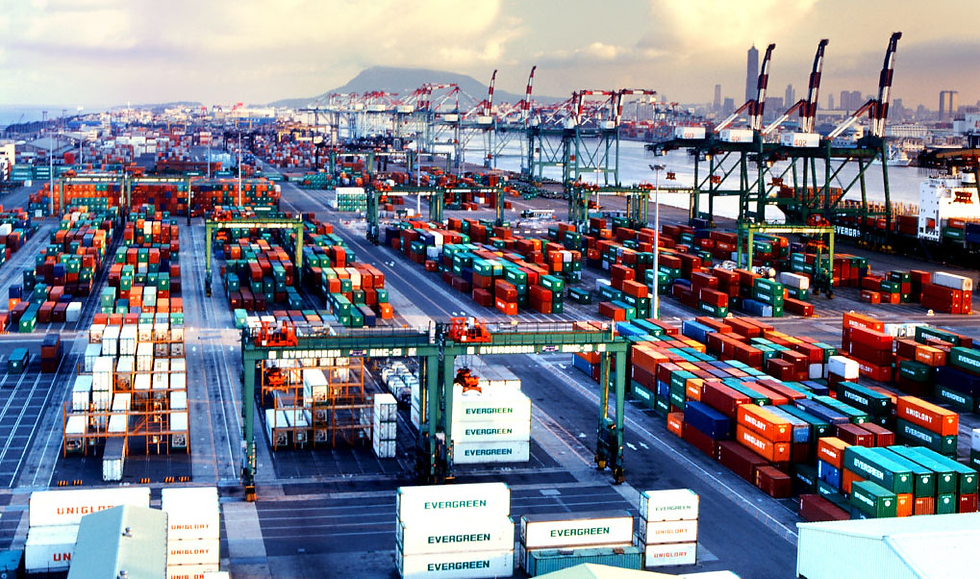
In the seaport sector, Vietnam’s pace of progress has been particularly remarkable. According to Lloyd’s List data in 2024, Vietnam had three ports ranked among the world’s top 50 container ports: Ho Chi Minh City Port (25th), Hai Phong Port (33rd), and Cai Mep – Thi Vai Port (34th). This marks Vietnam’s maritime logistics capability entering the global leading tier.

However, competitive dynamics among ports vary significantly across regions. Total projected investment for Vietnam’s seaport system through 2030 is approximately USD 14 billion. Hai Phong is expected to add around 2.8 million TEU of new capacity from 2025 onward, increasing competitive pressure on inland ports, particularly traditional upstream river container terminals that may lose market share to deep-water ports such as Lach Huyen. Meanwhile, southern port clusters are already operating near maximum capacity, resulting in relatively milder pricing pressure. In particular, Gemalink 2A, expected to begin operations in 2027, will further strengthen transshipment capacity for high-value-added manufacturing exports.
Inland Waterways: Untapped Natural Advantages and Digital Transformation
Vietnam possesses a dense river network totaling approximately 42,000 km in length, creating a unique natural advantage for inland waterway transportation development. However, to date, only around 40–50% of the navigable waterways’ actual potential has been effectively utilized. This indicates substantial remaining room for optimization in domestic logistics.

The two principal waterway systems are the Mekong Delta in the south and the Red River corridors in the north. Notably, during the 2025–2030 period, the Government will intensify upgrades to hard infrastructure such as waterways, bridge clearance heights, and lock capacities. Simultaneously, electronic port systems (E-port) are being widely deployed across many Mekong River localities, helping shorten customs clearance waiting times and driving strong growth in inland waterway container throughput, projected to exceed 1.5 million TEU nationwide by 2030.


Comments